Meet the DAWN-IRES Scholars: Andrés Luengo

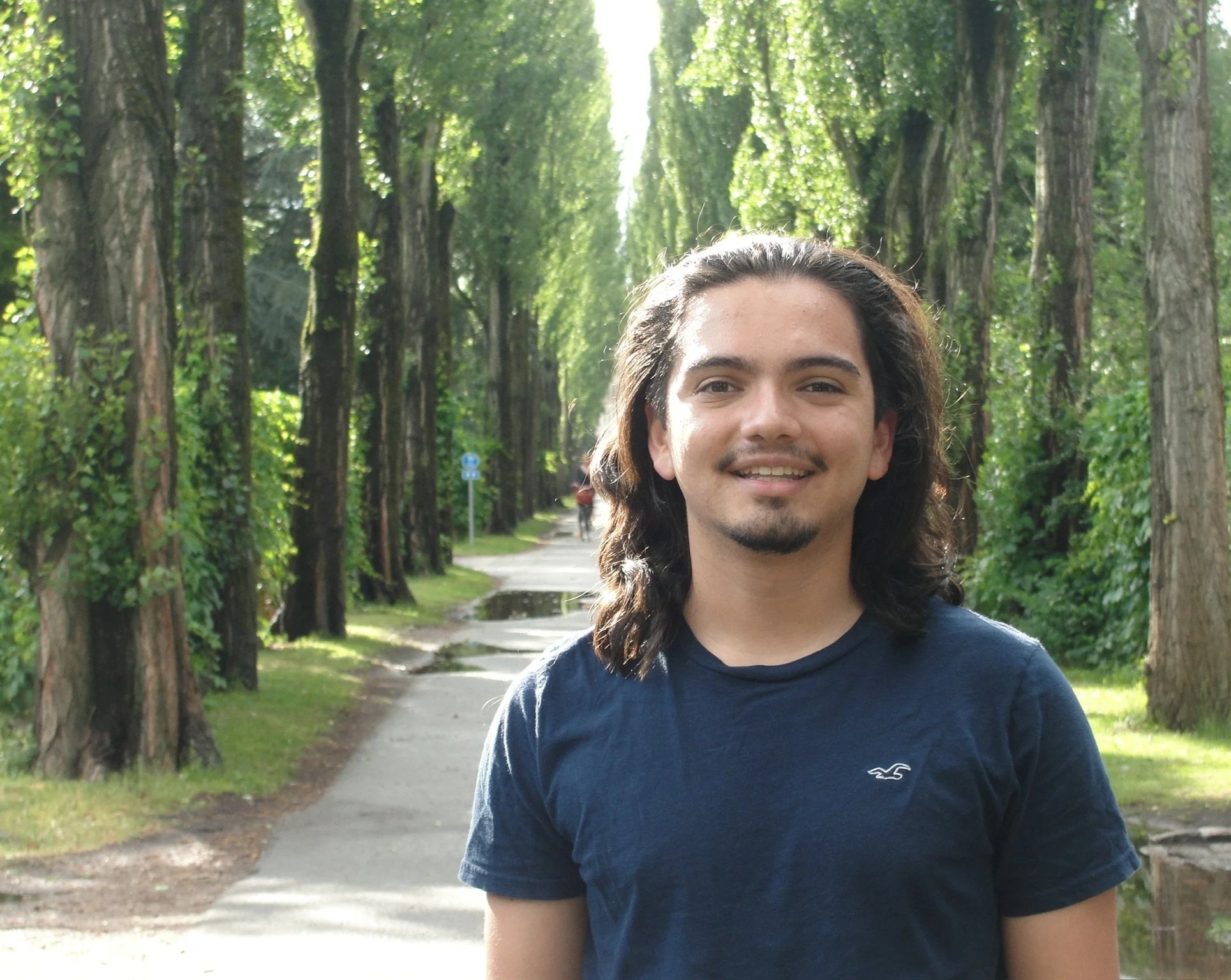
Andrés along the famous tree-lined path at Assistens Cemetery in Copenhagen, the resting place of Hans Christian Andersen, Niels Bohr, and other Danish luminaries.

Tell me a little about yourself:  I was born in Venezuela and moved to the United States when I was 10 years old, settling in Weston, Florida, near Fort Lauderdale. I did my middle and high school years there before heading to Yale University, where I study physics and computer science. All of my research, though, is in the astronomy department, where I work with Prof. Earl Bellinger in the Yale Astro ML group.  We apply machine learning to asteroseismology, the study of stellar interiors through the oscillations stars make, a bit like using seismic waves to probe Earth's interior.

I originally applied to Yale as an astrophysics student, then switched to a physics major between freshman and sophomore year when I wasn't sure what I wanted to commit to.   Though, at this point, I've come around and will probably end up in astronomy anyway. One thing I didn't expect from Yale was how much the liberal arts side of it would shape how I think. I originally wanted to go somewhere more technical, like MIT or Georgia Tech, and thought I had no business taking non-STEM classes. Having them essentially required has turned out to be one of the best things about my time there.

How did you get interested in astronomy?  I wanted to be an astronaut when I was little (pretty standard) and that interest just kind of carried through as I grew up. I watched a lot of pop science content about astronomy, especially the YouTube channel Kurzgesagt, which made really entertaining videos about big ideas in physics and space. I also knew early on that I liked physics and computer science from my classes, so astronomy felt like the natural intersection of all of it.

What is your favorite part about Copenhagen? DAWN?  The bike infrastructure here is genuinely remarkable.  I’ve been riding around a lot, and the whole city just makes it easy. I grew up going to Universal Studios, so I'm used to amusement parks being hectic and loud, but even Tivoli felt completely different, more like a beautifully manicured garden than a theme park. Copenhagen just seems to have its priorities in the right place when it comes to parks and public space. It feels like a very healthy city to live in.

At DAWN, I love how many opportunities there are to interact with everyone. The communal lunch, where the whole group grabs food and sits together at a big long table, is something I'd never experienced at quite that scale before. And the Cake Talks, where researchers give informal presentations over cake, have been a great way to get a broad view of the different things people are working on, even when some of it is a bit beyond my level to follow in full detail.

What motivated you to apply to an international summer research program?  I haven't done a lot of travel since starting high school, and this felt like a real opportunity to step outside my comfort zone. Everyone tells you to study abroad, but as a physics major it's hard to make work, so this is my version of it. I've also never been away from family for quite this long, though I can't claim to be a total stranger to big transitions, having moved to a whole new country at age 10.
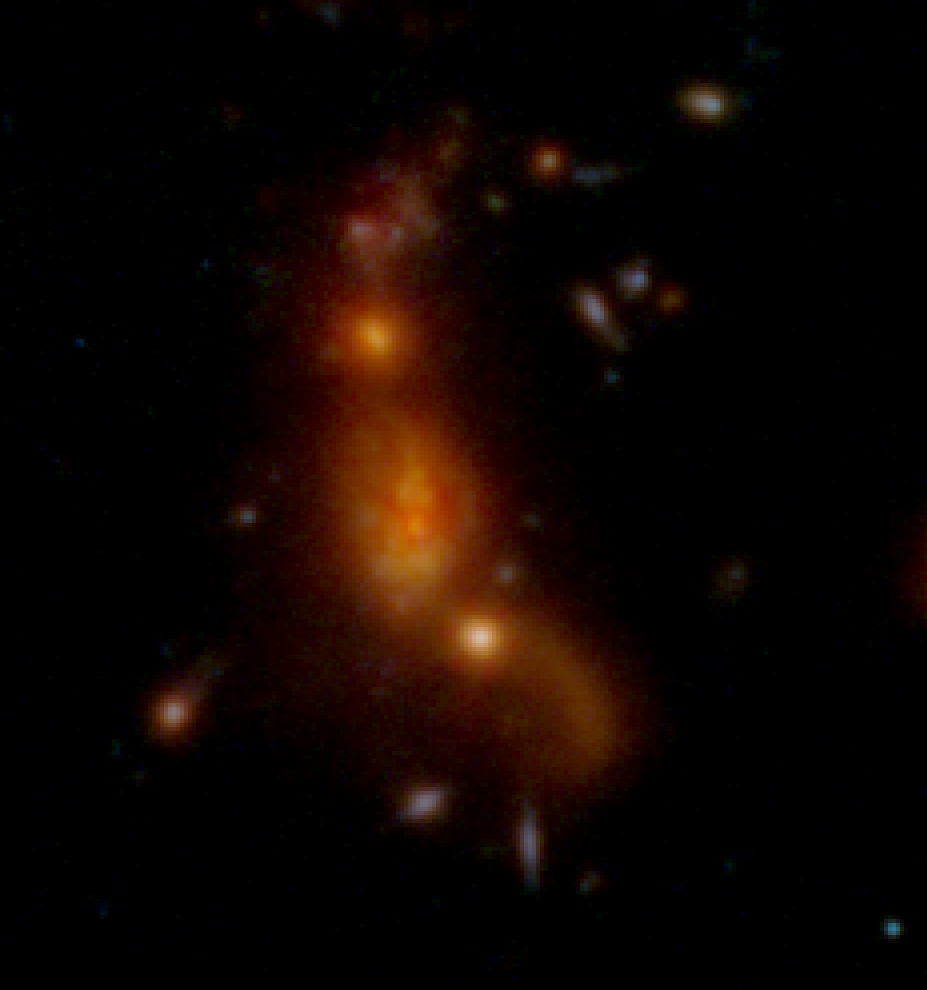
A JWST image of a galaxy group in GOODS-South seen when the Universe was about 2 billion years old. The three interacting galaxies, nicknamed "The Good, the Bad, and the Ugly" by the research team, include a dormant galaxy, a mysterious compact red object, and a dusty star-forming galaxy. Andrés is working to characterize each one and understand whether their interactions have shaped their very different fates.

Can you tell me about your summer research project?  The project is focused on a really interesting system in GOODS-South, a region of the sky that has been imaged deeply by both the James Webb Space Telescope and the Hubble Space Telescope. What makes this system exciting is that it appears to contain four very different types of galaxies — a star-forming galaxy, a "little red dot" (mysterious compact objects seen in the early universe that have sparked a lot of debate about what they actually are), a dusty star-forming galaxy, and a quiescent (dormant) galaxy — all at roughly the same distance from us, and apparently interacting with each other.

The project has two connected goals. The first is to characterize each of these galaxies individually, figuring out their masses, how quickly they are forming stars, and their histories by modeling these properties from the light we observe. The second goal is to understand the broader environment: we think these galaxies may be part of an overdensity, an early cluster where many galaxies have gravitationally gathered together in the same region of space. If the dormant galaxy has stopped forming stars partly because of its interactions with its neighbors, that could be evidence of "environmental quenching" — the idea that a galaxy's surroundings can play a direct role in shutting down its star formation.

As a side note: while getting set up with the tools early on, I found and fixed a bug in EAzY, a widely used software for estimating galaxy distances from their light. The developer, Gabe Brammer (who is faculty here at DAWN) , added me as a contributor to the project.  I thought that was very generous for a one-line fix, but I appreciated it a lot.

What skills or knowledge have you been working on developing so far this summer?  I feel fairly confident in my technical abilities and the coding side of things. What I'm hoping to develop more is the scientific judgment side by getting better at reading papers and building enough understanding of what I'm doing to be able to pick my own next direction rather than immediately checking in with my advisor every time I finish a step. Those are harder skills to develop, but I think this summer is a good place to start. The workshops have helped. Particularly Will's session on how to read a scientific paper, which was genuinely useful because my advisor has already been sending me papers to get through.

What Danish word or phrase have you picked up that you now use constantly?  Undskyld mig, or “excuse me.” I learned it out of necessity when I first started biking, because I was a little reckless and needed it fairly often. I'd say I've improved since then. I've also been trying to learn Danish on Duolingo so I could at least read grocery store labels — though I have yet to meet a single person in Copenhagen who doesn't speak perfect English, so the practical urgency has been limited.
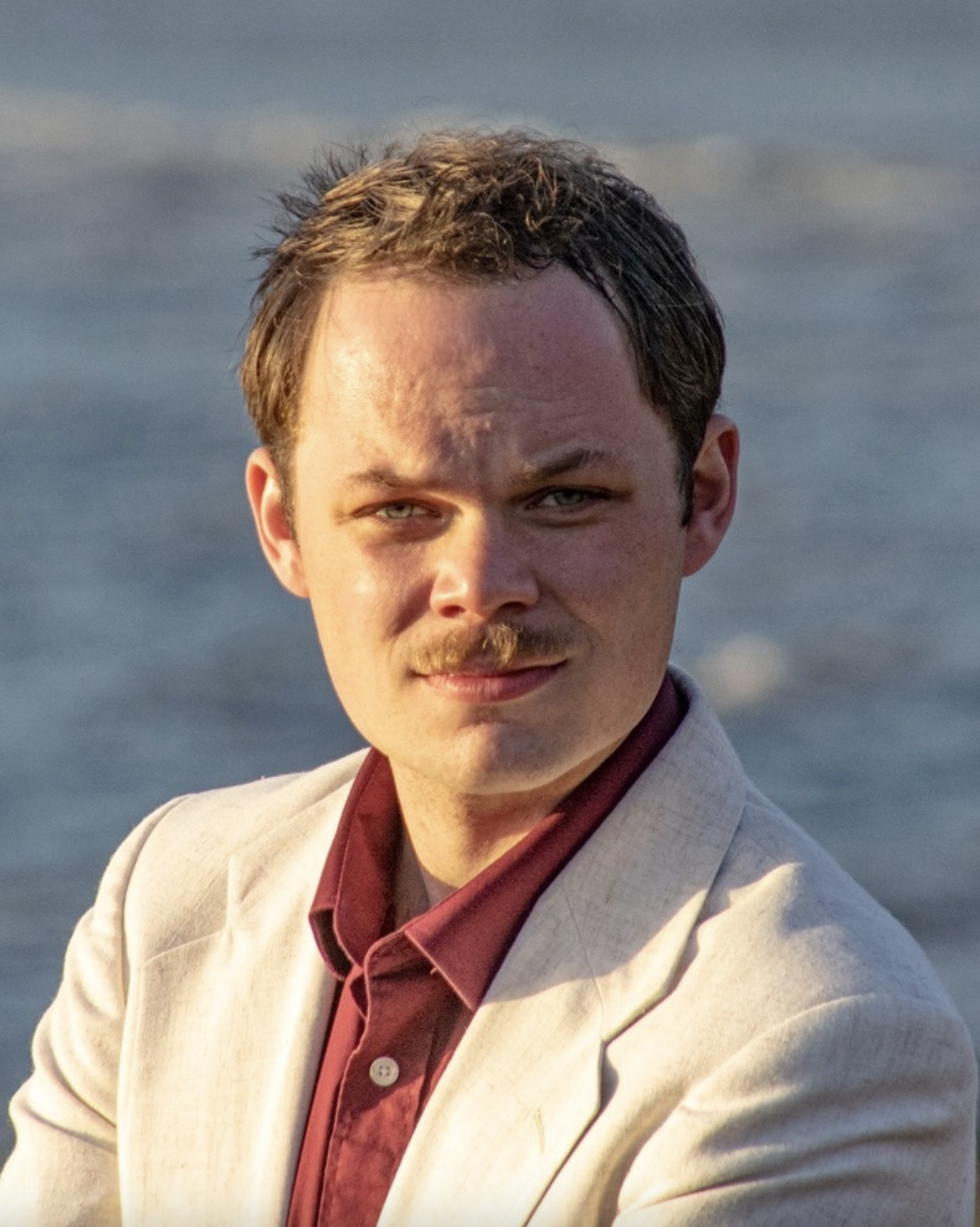
Meet the DAWN-IRES Scholars: Will Jarvis

Banner photograph by Will Jarvis of globular cluster Messier 13, a massive cluster of several hundred thousand stars that formed more than eleven billion years ago. Will's project aims to one day observe clusters like M13 much closer in time to when they formed.

Will is a DAWN-IRES Senior Scholar, leading professional development workshops while continuing his PhD research.

Tell me a little about yourself. I'm a PhD student in the Department of Astronomy at UMass Amherst, currently transitioning from my first to second year, working with Kate Whitaker. I did my bachelor's at the University of Wisconsin-Madison in astrophysics, where I mostly worked on active galactic nuclei (AGN), the intensely luminous cores of galaxies powered by supermassive black holes, before deciding to try something different for my PhD.

Outside of research, I play drums — I drum for the pep band at UMass and have played in a few bands, including a space rock band called Live from Mars that has two albums out (I write most of our lyrics). I also compete in ballroom dance, mostly international waltz and foxtrot this past semester, plus rumba and cha-cha, and I love lindy hop (a style of swing dance). I write poetry and do astrophotography on the side.

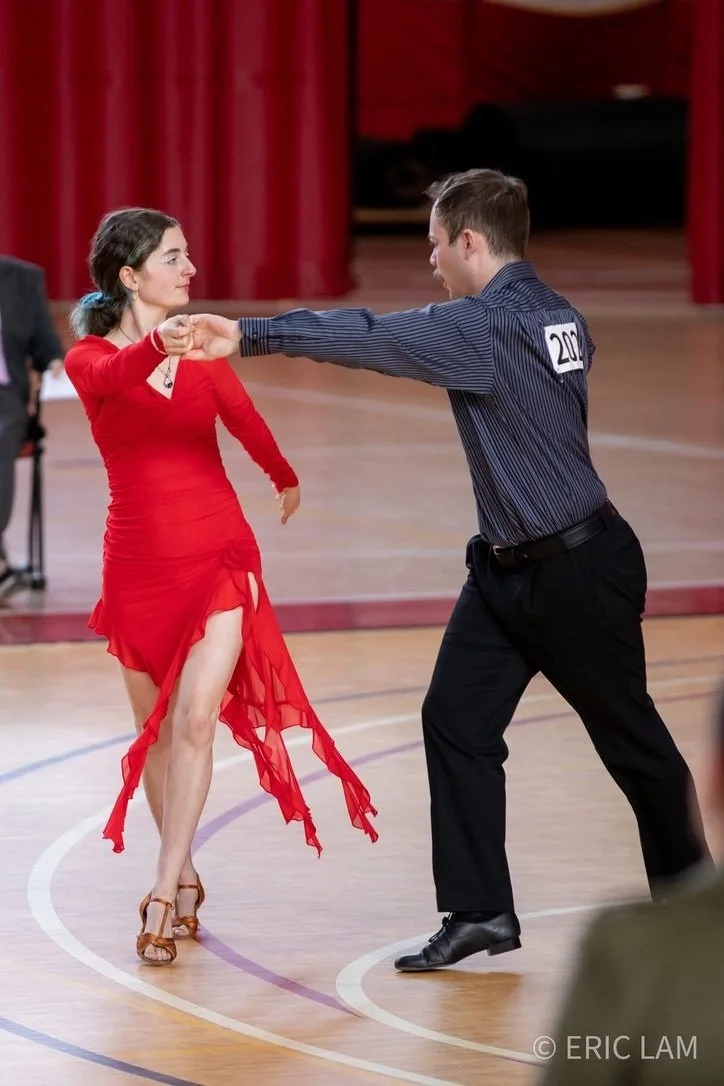
Will and partner Sonia dancing the rumba at the MIT Open Ballroom Dance Competition where they took second place.

I grew up in Wisconsin Dells, the self-proclaimed water park capital of the world, with more water parks per capita than almost anywhere on Earth. My high school job was at a local science museum, where I was the caretaker of a backup Mir space station module (built to launch and replace the actual Mir Space Station in 1991, but abandoned and purchased by a local businessman after the fall of Berlin Wall). So for a few years, it was just the astronauts and me looking after space stations.

How did you get interested in astronomy? I was drawn to aviation and space from a young age. My grandfather flew the P-38 Lightning in World War II, which inspired a love of aviation early on, and visiting my uncle, the chief autopilot engineer at Boeing, for a tour of the manufacturing facility when I was about 8 left a big impression.  I started going to the EAA AirVenture airshow in Oshkosh, Wisconsin, where I met astronaut Kent Rominger in high school, which pushed me further toward science and STEM. Watching Star Trek growing up really sealed my interest in studying space specifically.

My turning point was working with the Pulsar Search Collaboratory (run out of West Virginia University) as a high school senior. I got to use the 100-meter Green Bank Telescope for a week, including being woken in the middle of the night and given half an hour to do whatever I wanted with the telescope. I spent about 24 hours trying to reduce and analyze the data afterward so I could present it in a talk a day and a half later. After that experience, I was hooked.

What is your favorite part about Copenhagen? DAWN? The community at DAWN has been great — the grad students and postdocs are lovely, and everyone is genuinely interested in talking about science and answering questions. I'm in a bit of a unique position since globular clusters aren't something DAWN typically works on. That’s actually opened a lot of doors, since people are curious to learn, and it's let me reconnect with some AGN conversations from my undergrad work too.  A nice full-circle moment!

As for Copenhagen itself, the city is beautiful and biking everywhere makes it easy to get around. The music scene has been a true highlight for me. I've been going to open jams a couple of times a week and have played drums on stage 8 or 9 times since arriving. The jazz scene here is something else entirely.

What motivated you to apply to an international summer research program? I wanted real experience doing science in a different country and culture, and DAWN had the right people to make that worthwhile, with strong faculty and postdocs across the board. I'd always wanted to study abroad as an undergrad but could never make the timing work. I did two REUs in college, in Hawaii and Nantucket, but living in a European country is a different experience than living on a U.S. island. I also already knew DAWN postdoctoral fellow Conor McPartland from a previous REU, so it was nice walking into DAWN with an existing connection, even though our research has diverged since then.

Can you tell me about your summer research project? This summer I'm building one of the first samples of globular clusters at high redshift, looking back across roughly 10 billion years of cosmic time. I'm focused on the most massive clusters from this era, since the smaller ones are too faint to detect with current data. Studying the massive ones tells us how globular clusters formed in the early universe and lets us compare their properties to clusters we see locally today, including how much mass they lose over time. I am focusing on looking at clusters around the most massive host galaxies in the universe, to understand why those galaxies seem to have an excess of clusters, and whether their clusters are unusually massive.

I'm also working with DAWN faculty Johan Fynbo on a machine learning side project to build a training set such that an algorithm can learn to identify globular clusters automatically rather than relying on time-consuming visual inspection. This becomes increasingly important as the James Webb Space Telescope (JWST) produces more deep fields and as upcoming telescopes like the Nancy Grace Roman Space Telescope and Euclid open up much larger areas of sky. At scales such as these, we'll need machine learning to find not just hundreds of globular cluster candidates, but expanding to millions or possibly even billions across the sky.

What skills or knowledge have you been working on developing so far this summer? The biggest skill I’m developing is learning how to use a software called Prospector to do spectral energy distribution modeling of the cluster candidates.  This is a technique where you take JWST imaging across multiple wavelengths, extract the light from each cluster, and model it to estimate physical properties like mass and stellar age. It's a new methodology for me, so it's taken real time to learn.

I've also been developing and leading workshops as a DAWN-IRES senior scholar, which is new territory.  I’ve mentored students individually before, but not designed time-constrained workshops on a range of topics. One I led was on how to read a scientific paper: I wrote a tutorial and then walked students through an actual paper together, discussing strategies for pulling out the information you need efficiently. It seemed especially useful since their research advisors have already started handing them papers to get through.

What Danish word or phrase have you picked up that you now use constantly? Smørrebrød — the classic Danish open sandwich. I can't get enough of it. I spent a week with my cousins recently who showed me how to make several versions; it's traditionally made with rye bread and topped with things like pickled or curried herring, roast beef, or hard-boiled eggs, sometimes mixed, sometimes kept separate. I'm determined to recreate it back home, even if tracking down all the herring varieties might be a challenge — my partner wants to learn to make the rye bread too.

Meet the DAWN-IRES Scholars: Allan VanZandt

Tell me a little about yourself.

I'm a 3rd year Bachelor's student at the University of Michigan studying astronomy, physics, and math. In my free time I like to make music and talk with my friends.

How did you get interested in astronomy?

I got into astronomy in kindergarten when we had a unit on the planets (coincidentally, just a few months before the IAU decided that Pluto was off the list).

What is your favorite part about Copenhagen? DAWN?

If I had to choose, my favorite part about Copenhagen is how easy it is to bike around everywhere. I live in a pretty bike-friendly city by North American standards, but I couldn't imagine doing a 45 minute bike commute there.

Aside from the coffee machine, my favorite part about DAWN is the community. For how impressive the research is at DAWN, everyone is super friendly and there's a strong emphasis on work-life balance.

What motivated you to apply to an international REU?

I've always thought that international collaboration is critical in science, both for its ability to inspire new breakthroughs as well as its power to convince people that other countries/cultures aren't as different or sinister as they might have thought.

Can you tell me about your summer research project? (replace with PhD research for grad students)

I'm using data from the ALMA radio observatory in Chile to constrain various physical characteristics of a very distant galaxy undergoing a period of extremely intense star formation.

What skills and knowledge would you like to acquire this summer?

This summer I'm excited to have a long stretch of time dedicated solely to research to help me decide if I want to continue in research, and the kind(s) of research I enjoy doing.

If you could have any superpower what would it be?

It would be pretty nice to not have to sleep. Eight extra hours of consciousness every day would be super helpful.